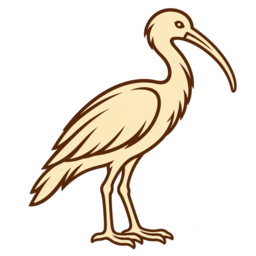
The Ibis and the Monkey
The hadeda ibis and the vervet monkey are part of everyday life along the coast of KwaZulu-Natal. They appear in gardens, on rooftops, beside roads, and sometimes much closer than expected. Both have become symbols within How We Are Here, not because they are solemn or distant, but because they are so unmistakably alive.
The hadeda announces itself with a call so loud that, when it sounds nearby, thought is briefly interrupted. For a moment, it becomes difficult to remain absorbed in the mind. The bird also carries an older association with messages and good news. Here, it points both toward interruption and arrival: the sudden break in familiar thinking through which something new may be noticed.
The vervet monkey brings another quality. It is curious, watchful, playful, and always ready for mischief. It may approach from behind, steal food from an unguarded hand, enter through an open window, and inspect every cupboard as if it had been invited. Nothing is accepted simply because it has always been arranged that way.
The monkey represents the part of the mind that remains open, questioning, and willing to look somewhere unexpected. It can be troublesome, certainly, but it can also keep life from becoming too fixed and serious. I often think of this as having a monkey sitting on my shoulder: an alert and mischievous companion that keeps asking whether things might be seen differently.
Together, the ibis and the monkey bring two useful reminders. The ibis interrupts the noise of thought. The monkey prevents thought from becoming too settled. One calls us back to what is here; the other keeps the door open to what has not yet been considered.